Utah's Range Creek Herd Needs YOUR Voice!
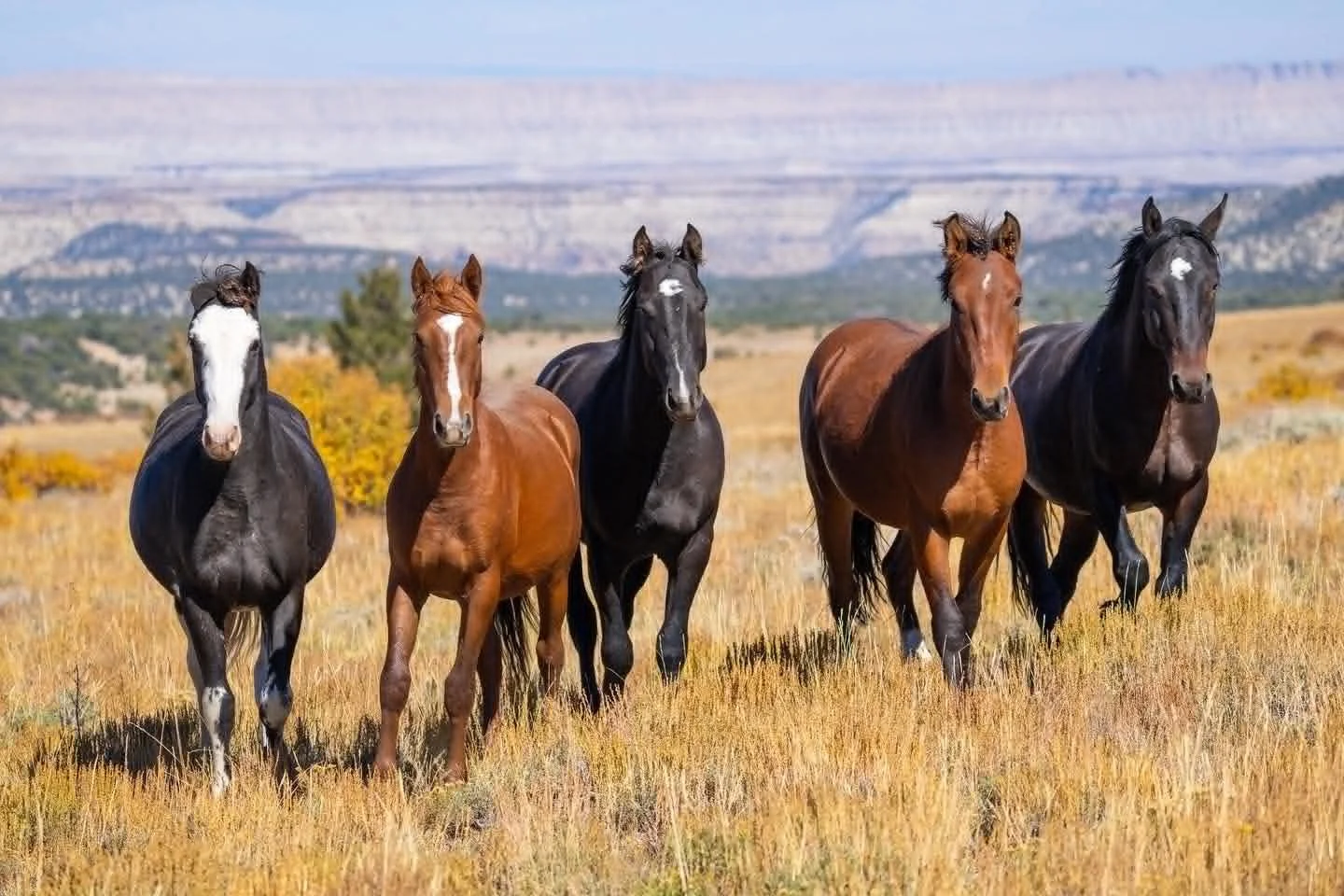
Utah’s Range Creek HMA wild horse band. Photo © Tandin Chapman.
BLM's Plans Could Push Utah's Range Creek Wild Horses Toward Extinction
Deadline for Public Comments: September 2, 2026
For years, the Bureau of Land Management (BLM) has kept Utah's Range Creek wild horse herd at an Allowable Management Level (AML) of just 75–125 horses — far too small to ensure the long-term genetic health of an isolated herd.
The consequences are already evident. Range Creek has documented genetic concerns, yet BLM has not genetically tested the herd since 2006.
Now, rather than addressing the conditions threatening this small herd's genetic future, BLM is beginning development of a new long-term Herd Management Area Plan (HMAP) that could continue the same low AML, remove most of the current herd, and add GonaCon, a fertility control drug that research shows can permanently sterilize mares after as few as two applications.
This is not protection. This is a prescription for genetic collapse.
TAKE ACTION: Tell BLM to protect the genetic health and future of the Range Creek wild horses.
Range Creek HMA Is an Island — Because BLM Made It One
When BLM began managing the Range Creek herd in the late 1970s, wild horses occupied surrounding areas as well.
Over the decades that followed, BLM systematically eliminated wild horse management from nearby Herd Areas:
Hill Creek HA — zeroed out in the 1990 Book Cliffs Resource Management Plan
Winter Ridge HA — zeroed out in the 1990 Book Cliffs Resource Management Plan
West Douglas HA — zeroed out in the 2007 White River Resource Management Plan
By 2007, every potential corridor for wild horse movement had been erased.
Yet BLM's Management Evaluation Report (MER) repeatedly suggests that Range Creek is part of a connected “metapopulation.”
How?
Artificially moving an occasional horse from another HMA into Range Creek is not the same thing as natural gene flow among connected wild horse populations.
BLM's own management decisions have left Range Creek isolated. Now the agency proposes to continue managing this isolated herd at just 75–125 horses.
BLM Hasn't Tested the Herd's Genetics in 20 Years
Perhaps one of the most troubling facts in BLM's own Management Evaluation is also one of the simplest:
The Range Creek herd has not been genetically tested since 2006.
That testing raised serious concerns about the herd's genetic diversity.
Nearly two decades later, BLM is preparing a management plan that could govern this herd for another 20 years or more — without current genetic data showing what condition the herd is in today.
Despite that, BLM maintains that an AML of just 75–125 horses is “appropriate.”
For a small, isolated population, genetic drift and inbreeding are not abstract concerns. Loss of genetic diversity can reduce a population's ability to adapt to disease, environmental change, and other pressures over time.
BLM should know the current genetic health of this herd before deciding how many horses to remove, how many should remain, or how aggressively reproduction should be suppressed.
75–125 Horses Is Not a Long-Term Genetic Strategy
BLM proposes to continue managing Range Creek at an AML of only 75–125 horses.
The Cloud Foundation is asking BLM to evaluate an AML of at least 150–200 horses and establish an AML sufficient to maintain long-term genetic viability based on updated genetic analysis.
BLM's own geneticist, Dr. Gus Cothran, has repeatedly emphasized the importance of avoiding inbreeding in the management of small wild horse populations.
Yet BLM's proposed direction would continue maintaining Range Creek as a very small, isolated herd while relying on occasional introductions of outside horses to address genetic concerns.
BLM must provide the science behind that strategy — including a scientific and statistical basis for its assertion that introducing just eight horses can adequately protect genetic diversity while maintaining this isolated population at only 75–125 horses.
BLM Eliminated Wild Horse Habitat — It Should Consider Restoring It
The genetic problem isn't just about the number of horses. It's also about habitat.
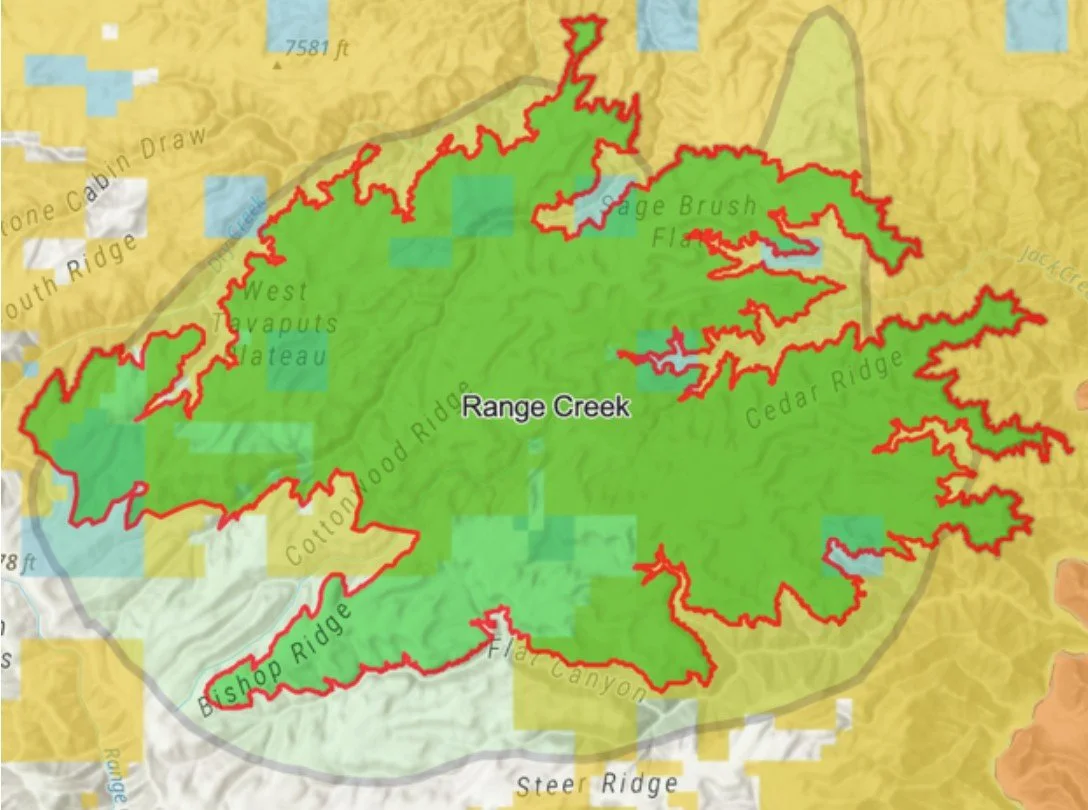
BLM's Management Evaluation states that the Range Creek HMA encompasses 55,023 acres. BLM's Wild Horse & Burro Program data from March 2025 shows that the original Range Creek Herd Area contained 59,407 acres of BLM-managed public lands, compared with only 43,235 acres of BLM-managed public lands within the current HMA.
That represents 16,172 acres — approximately 27% — of original BLM-managed wild horse habitat that is no longer managed as HMA.
Instead of continuing to squeeze this herd into an artificially small population, BLM should take a hard look at restoring appropriate portions of the original Herd Area to active wild horse management, increasing AML accordingly, and providing the habitat necessary to support a larger, healthier herd.
BLM should also evaluate its authority under 43 C.F.R. § 4710.5 to eliminate or reduce livestock grazing where necessary to provide adequate habitat for wild horses.
Why GonaCon Is Especially Troubling for Range Creek
BLM is considering GonaCon and other fertility-control methods as part of its future management of Range Creek.
For a large, genetically healthy population, fertility management presents one set of questions.
For a herd already struggling with genetic diversity and maintained at an AML of only 75–125 animals, suppressing reproduction creates an entirely different level of concern.
Research indicates that GonaCon can cause permanent infertility in mares after just two applications. In an isolated herd with compromised genetic health, permanently removing breeding mares from the reproductive population could further reduce the number of horses actually contributing genes to future generations.
Permanent sterilization is not the answer to a genetic diversity problem.
The Cloud Foundation supports scientifically studied, humane and reversible fertility control, including PZP and PZP-22. With a herd of this size, reversible PZP can be administered through darting or bait trapping without permanently eliminating mares from the reproductive population.
Before authorizing GonaCon or any other potentially sterilizing fertility treatment, BLM must fully analyze its long-term genetic consequences for Range Creek.
What BLM Should Do Instead
BLM still has an opportunity to change course before developing the Environmental Assessment and long-term HMAP.
The Cloud Foundation is asking BLM to:
Conduct updated genetic testing before preparing the EA or establishing its long-term management strategy.
Evaluate an AML of at least 150–200 horses and establish an AML capable of maintaining long-term genetic viability based on current genetic analysis.
Restore appropriate portions of the original Range Creek Herd Area to active wild horse management and increase AML based on the additional habitat.
Fully analyze the cumulative effects of eliminating wild horses from surrounding Herd Areas and the resulting isolation of Range Creek.
Evaluate reducing or eliminating livestock grazing under 43 C.F.R. § 4710.5 where doing so could provide additional habitat for wild horses.
Reject permanent or potentially permanent sterilization as a management strategy for this small, genetically vulnerable herd.
Use reversible PZP fertility control if fertility control is scientifically demonstrated to be necessary.
Provide a scientific and statistical analysis demonstrating whether introducing only eight horses can adequately address genetic concerns while maintaining an AML of just 75–125 horses.
Talking Points for Your Comments
Personalized comments can make a difference. You do not need to be a scientist or wild horse expert. Tell BLM why the Range Creek wild horses matter to you, and then use one or more of the points below in your own words.
Genetics
BLM should conduct updated genetic testing before preparing the EA or making long-term management decisions.
The herd has not been genetically tested since 2006, despite documented genetic concerns.
BLM should not continue managing an isolated herd at only 75–125 horses without demonstrating scientifically that this population can maintain adequate genetic diversity.
BLM should evaluate an AML of at least 150–200 horses and establish an AML based on current genetic data and long-term genetic viability.
Habitat & Isolation
Range Creek should not be treated as a naturally connected metapopulation when surrounding wild horse populations have been eliminated through previous BLM management decisions.
BLM should analyze the cumulative effects of zeroing out the Hill Creek, Winter Ridge, and West Douglas Herd Areas.
BLM should evaluate restoring appropriate portions of Range Creek's original Herd Area to active wild horse management.
BLM should consider reducing or eliminating livestock grazing where doing so would provide habitat needed to support a larger, genetically healthier wild horse population.
Fertility Control
BLM should not use GonaCon or other potentially permanent fertility-control methods on this small, genetically vulnerable herd.
Permanently removing mares from the reproductive population could further compromise genetic diversity.
If fertility control is necessary, BLM should use humane, reversible PZP rather than a method that could permanently sterilize mares.
The Eight-Horse Proposal
BLM should provide the scientific and statistical basis for its assertion that introducing only eight horses will adequately protect genetic diversity.
BLM must analyze whether introducing eight horses can compensate for maintaining an isolated herd at an AML of only 75–125 animals.
Periodically introducing outside horses should not substitute for maintaining a wild population large enough to sustain genetic diversity over the long term.
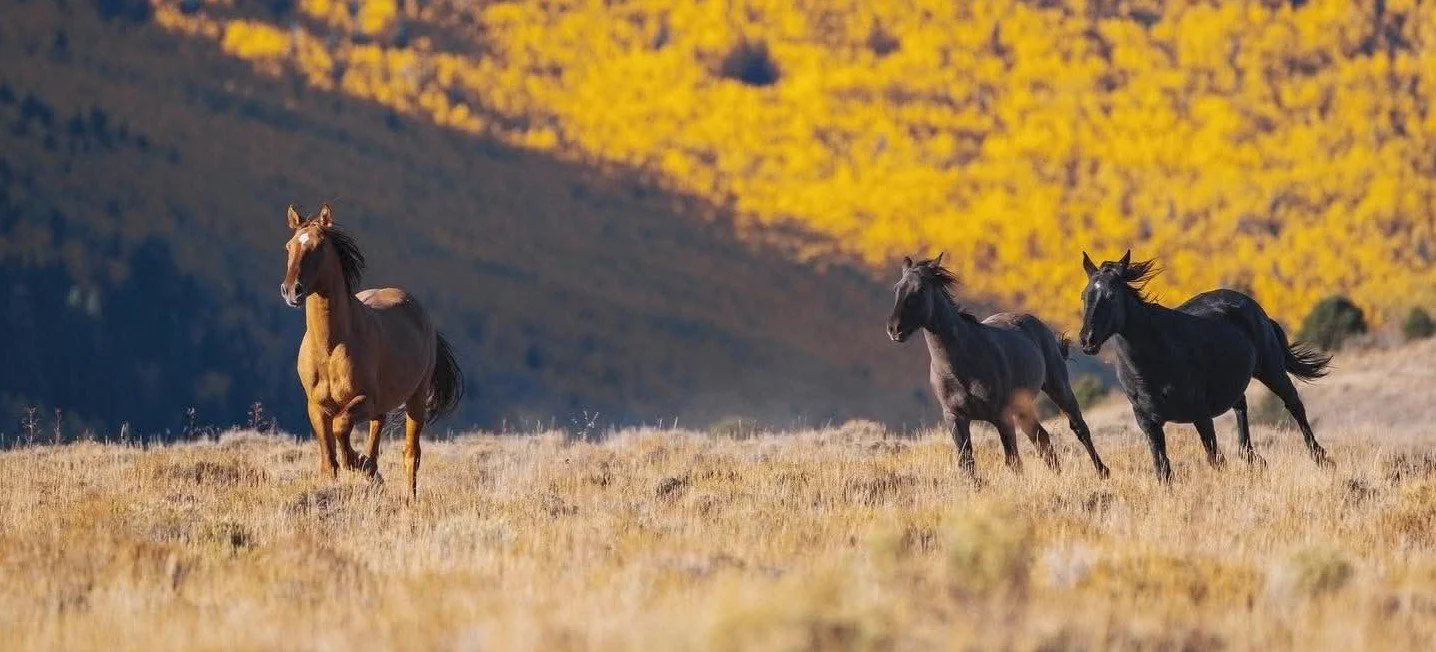
Utah’s Range Creek HMA wild horse band. Photo © Tandin Chapman.
Your Voice Matters
BLM is at the beginning of the process of developing a long-term management plan for Range Creek.
That means this is the time to speak up.
Once an HMAP is adopted, its management framework could guide decisions affecting this herd for decades.
Range Creek's wild horses deserve more than management that keeps their population artificially small, suppresses reproduction, and attempts to compensate for genetic decline after the damage has already occurred.
They deserve a population large enough, a habitat extensive enough, and management responsible enough to give this herd a future.
Please submit your comments by September 2, 2026, and ask your friends and family to do the same.
TAKE ACTION: Add your name and stand with the Range Creek wild horses.
If we don't speak up for them, who will?
Background Documents
BLM Range Creek Management Evaluation Report (July-August 2026)
Click Here If You Have Trouble with This Form or Wish To Submit Comments Directly to BLM
BELOW: Range Creek HMA (grey outline with light green fill = original HA/herd area; red outline and dark green shaded area = current HMA). This map shows how sections have been eliminated from wild horse use. NOTE: White represents private lands and blue Utah state public lands