Pokegama Wild Horses Face Massive Removals and Sterilization
Take Action to Protect This Unique Oregon–California Herd
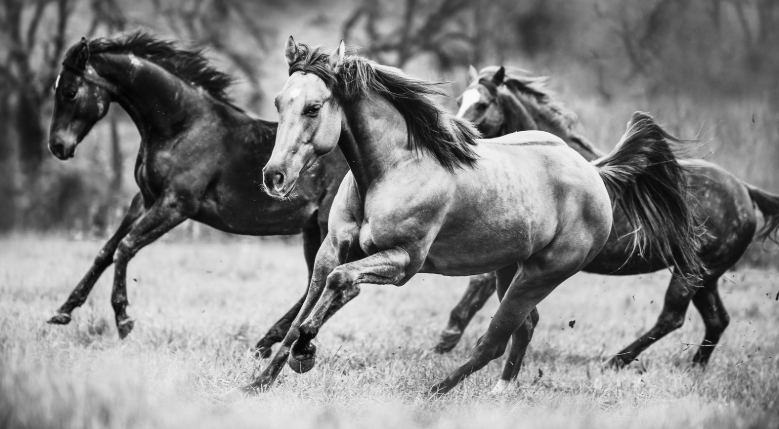
The wild horses of the Pokegama Herd Management Area (HMA), which straddles the Oregon–California border, face an uncertain future.
The Bureau of Land Management (BLM) is proposing a management plan that maintains an extraordinarily low Appropriate Management Level (AML) of just 30–50 wild horses, while authorizing fertility-control methods that include GonaCon and stallion castration.
With hundreds of horses currently estimated to inhabit the HMA, the proposed management approach could result in the removal of hundreds of wild horses.
A Herd Already at Risk
In 2024, BLM's aerial survey observed 248 wild horses in 41 groups, then estimated a population of 364 horses after adjusting for animals that may have been missed.
Using an assumed annual growth rate of 20%, BLM now projects 469 horses in 2026, excluding this year's foals.
But does that projection accurately reflect conditions in this forested HMA?
BLM's proposed management approach could reduce the population to just 30 horses, raising serious concerns about the herd's long-term genetic health and survival.
Where Is the Evidence That Wild Horses Are the Problem?
Private land dominates the Pokegama HMA, and BLM's supporting documents identify up to 1,700 Animal Unit Months (AUMs) of livestock grazing within its boundaries — equivalent to approximately 142 cows grazing year-round.
Yet BLM proposes maintaining only 30–50 wild horses.
Before imposing drastic reductions on this herd, BLM must fully evaluate livestock grazing, available forage, and the effects of its proposed management actions.
Genetic Diversity Cannot Be an Afterthought
BLM has not completed a genetic baseline assessment of the Pokegama herd.
Nevertheless, the proposed plan would authorize reproductive controls including stallion castration and GonaCon, a fertility-control drug that can cause permanent infertility in mares following repeated treatments.
Reducing an already genetically vulnerable herd to such a small population — while potentially removing breeding animals from its reproductive future — threatens its long-term viability.
Wild horses deserve management grounded in sound science, not irreversible reproductive interventions implemented without adequate genetic information.
Take Action Before October 16, 2026
The Pokegama wild horses need your voice!
The Cloud Foundation is calling on BLM to reconsider its proposed management approach, conduct genetic testing, adequately evaluate livestock grazing, and protect the herd's long-term genetic health.
Sign our petition urging BLM to protect Pokegama's wild horses with science — not sterilization and mass removals.
Click below to SIGN OUR PETITION
Public comment deadline: October 16, 2026.
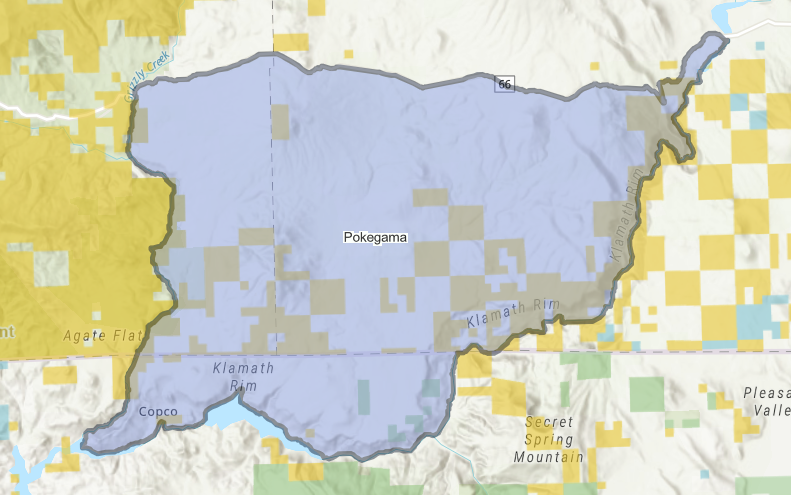
Pokegama HMA located on the Oregon-California border (purple shaded area is the HMA; within the HMA the orange/yellow boxes show BLM-managed public lands and the remaining white areas are private lands; green shading is Forest Service lands).