UPDATE! Comments Open for Lake Pleasant Burros
Stand Up for the Lake Pleasant Burros
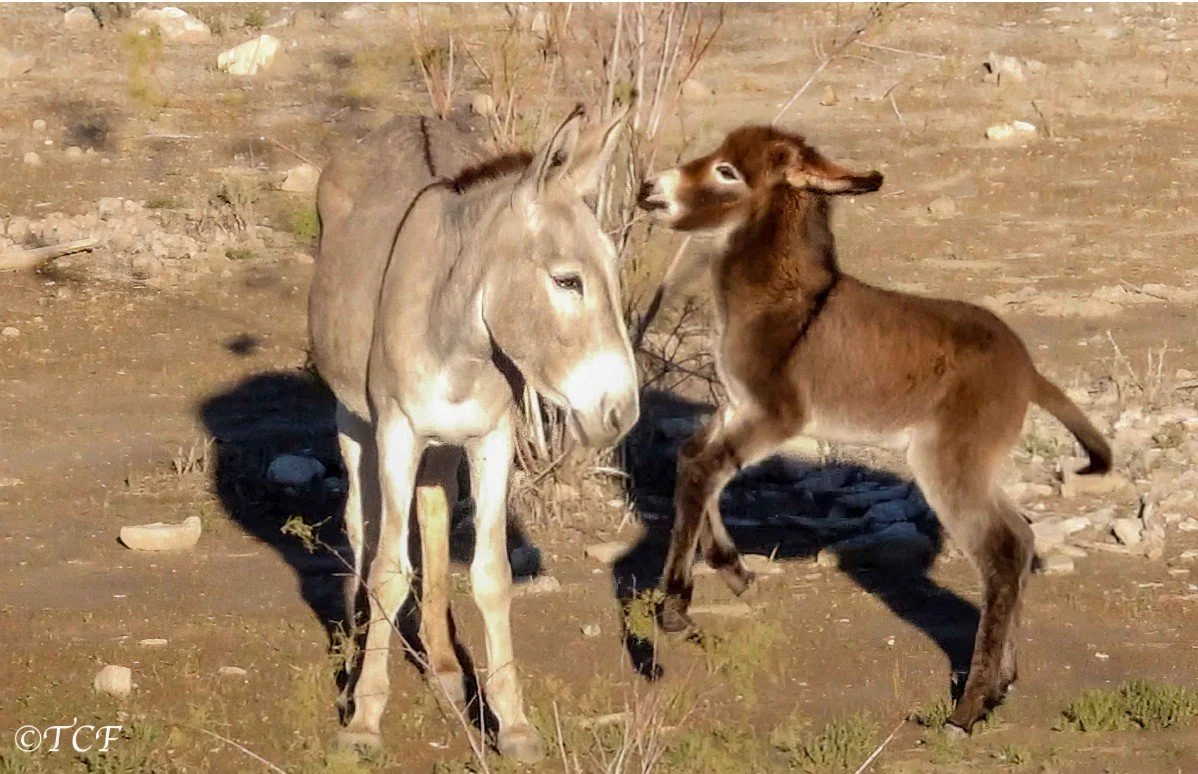
Public Comment Deadline: January 21, 2026
✨COMMENT PERIOD HAS BEEN EXTENDED!✨
Comments are NOW DUE at 1:00 a.m. Jan. 24, 2026 (Saturday- early)
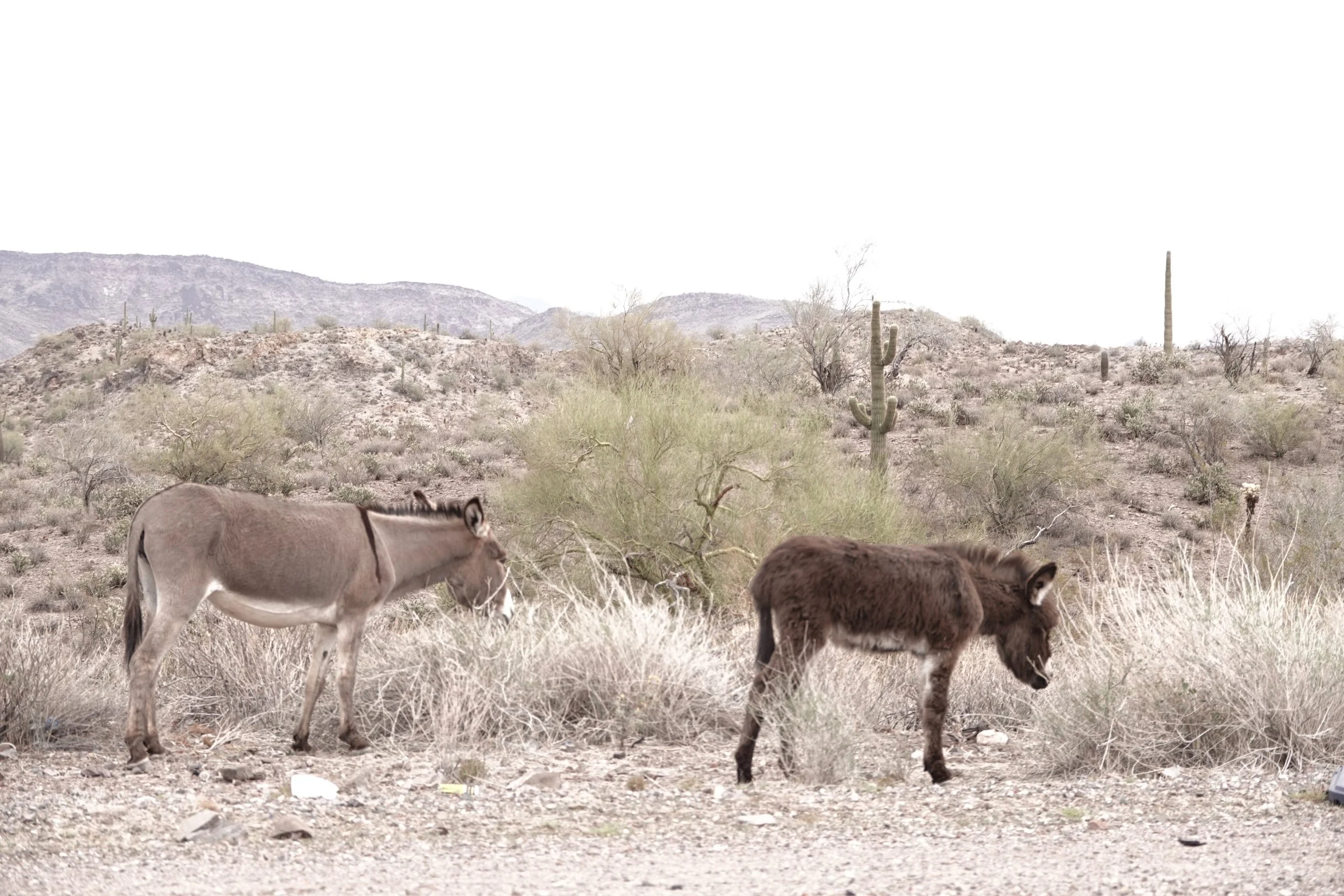
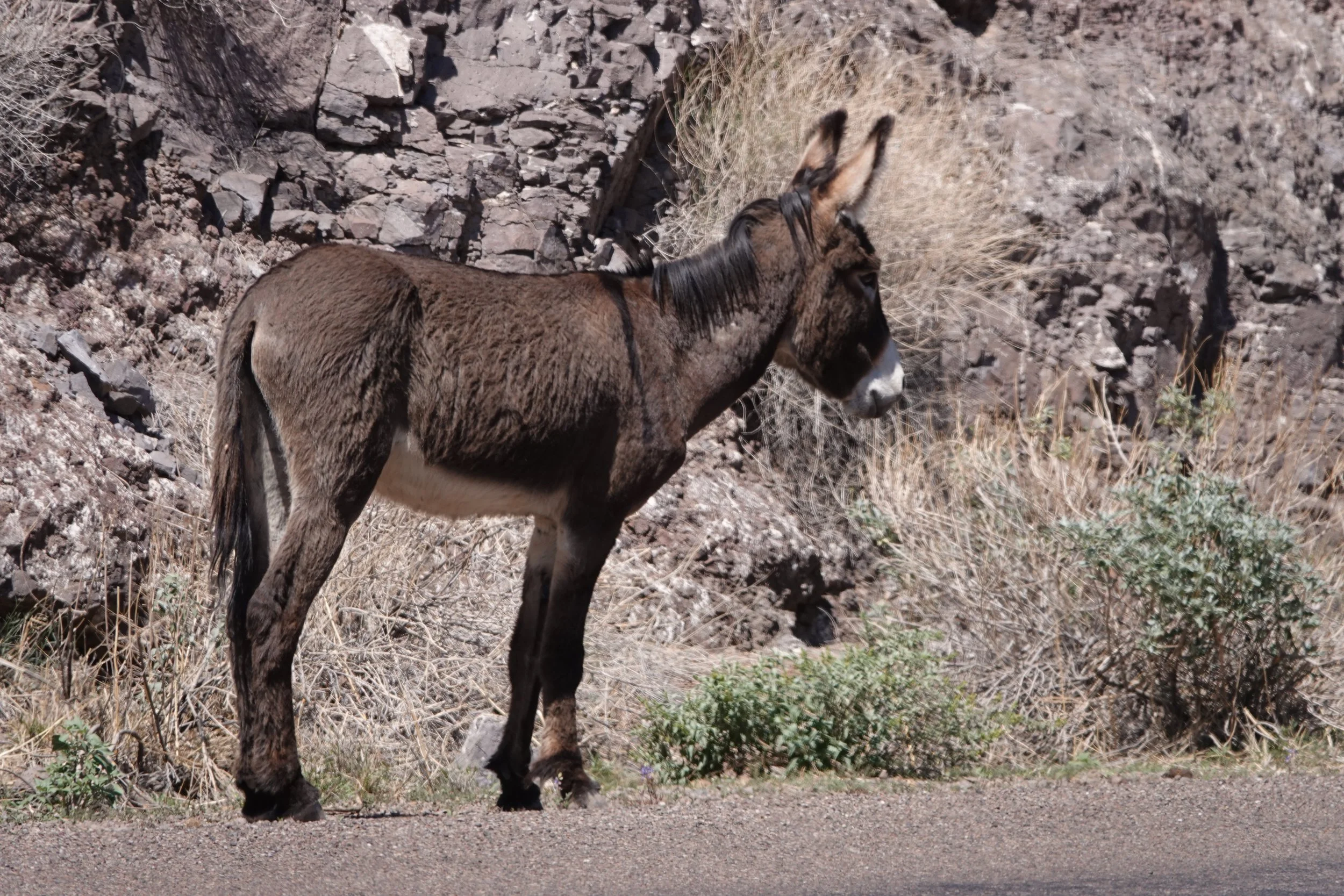
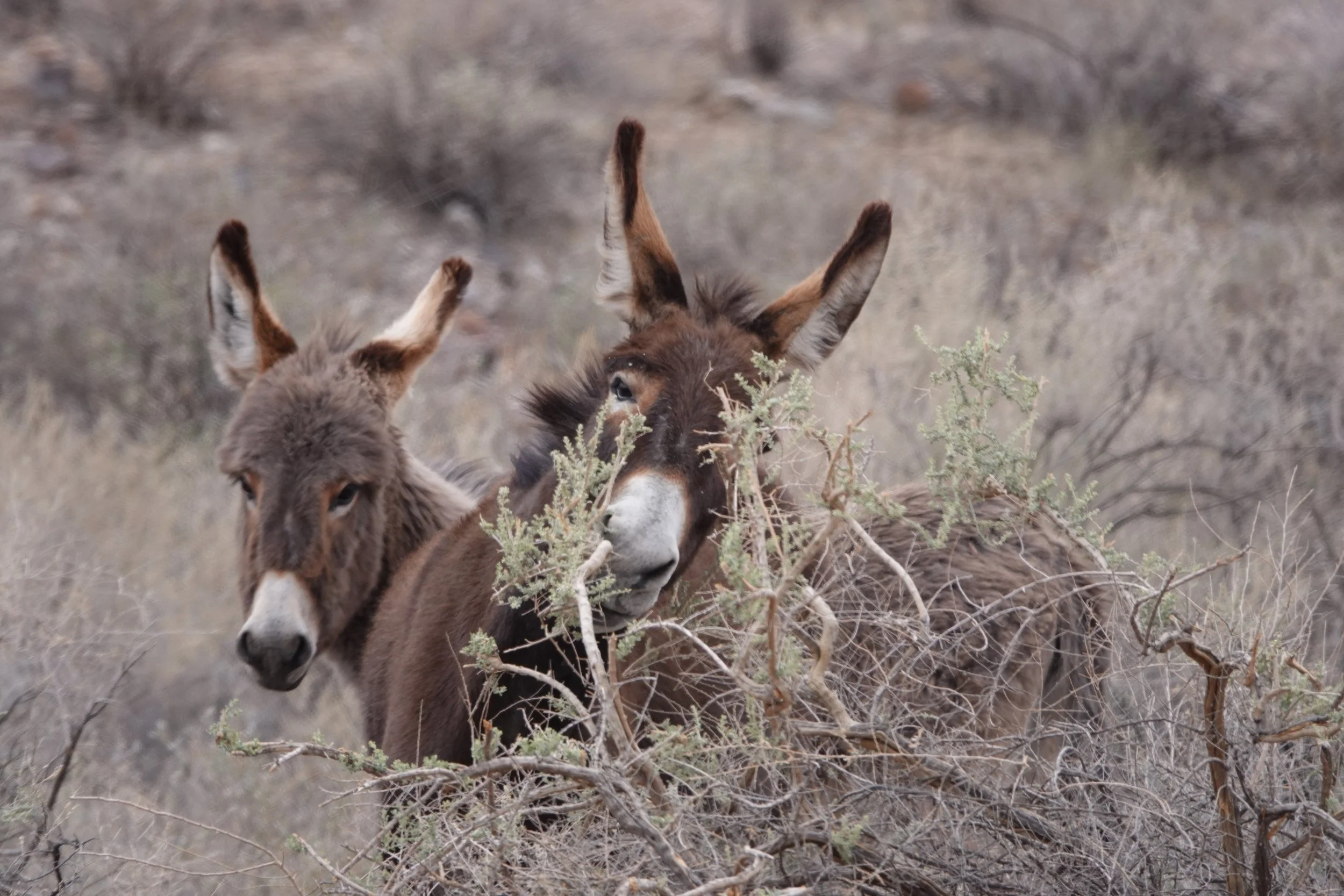
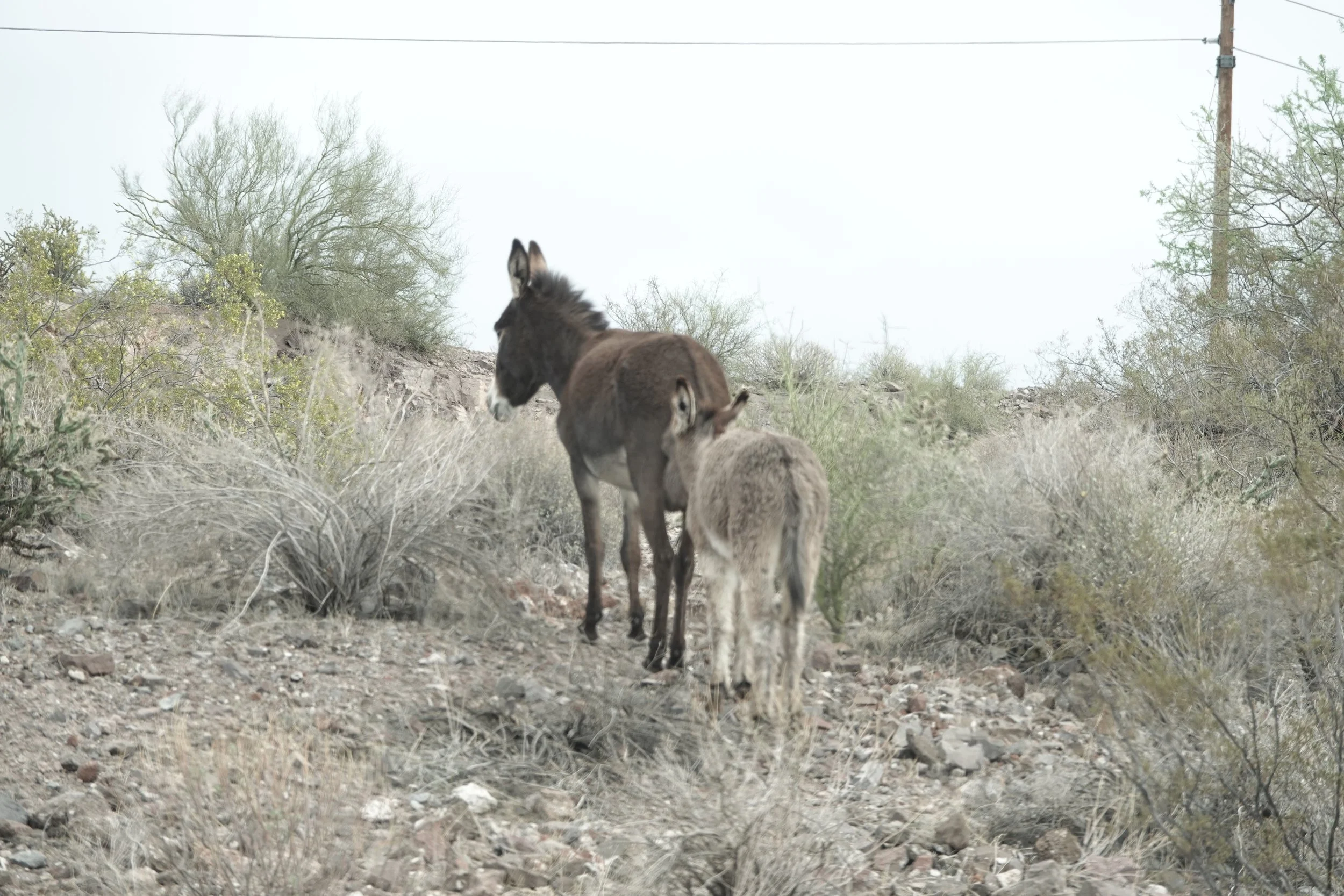
The Bureau of Land Management (Bureau of Land Management) is accepting public comments on a draft Environmental Assessment (EA )that will guide future management of the Lake Pleasant wild burro population in Arizona.
The EA proposes to establish an Appropriate Management Level (AML) of just 140–250 burros, authorize ongoing removals, and implement fertility control. Yet the EA itself acknowledges that the range could support 500 or more burros based on forage analysis, even as more than 2,300 burros are currently surviving on and around the Lake Pleasant landscape.
When thousands of animals are persisting on the land today, the public deserves a clear, science-based explanation for why such a drastic population reduction is being proposed.
Why the Science Matters
The proposed AML is far below the population levels needed to maintain genetic viability in wild burro populations.
Burro-specific diet studies show that browse species make up a substantial portion of burro forage, yet this data was not fully incorporated into AML calculations.
The EA acknowledges forage capacity for more burros, but does not explain the disconnect between that finding and the proposed low AML.
Fertility control methods proposed for use lack burro-specific, long-term data and may result in permanent sterilization after just two applications.
The EA does not adequately analyze human-caused habitat degradation, including off-road vehicle use, fence cutting, unmanaged recreation, and trash impacts — despite these activities being significant contributors to land disturbance and burros accessing roadways
The National Academy of Sciences has repeatedly found that BLM AMLs are not science-based and must be adaptable.
Get Informed
📄 Read the draft EA and planning documents HERE
Public comments are a critical part of the decision-making process. Submitting a personal comment directly to BLM carries the greatest weight, and we strongly encourage you to do so. Signing the petition helps demonstrate broad public concern — doing both is even better.
What to Address in Your Comments
We encourage you to read the EA (link above). Below are some concerns to look for in the EA and topics you may wish to address in your comments:
Ask BLM how the proposed AML reflects actual on-the-ground conditions, given the current burro population (current thriving population estimated 2300+)
Ask BLM to fully analyze human-caused habitat impacts, including off-road vehicle use, fence cutting, unmanaged recreation, and trash — and to distinguish these impacts from those attributed to wild burros.
Ask BLM to explain how burro forage and diet studies were incorporated into the AML calculation, including whether browse species (which make up a substantial portion of burro diets) were fully considered.
In the EA, BLM states that the range can handle 500+ burros. Why the low AML?
Avoid large-scale removals and prioritize humane, on-range management strategies (Tiered removals)
Ensure transparency and sound science in any fertility control or population management actions
Prioritize habitat-based and coexistence solutions over reproductive manipulation until scientific studies can be conducted
Reduce or halt livestock use before implementing fertility control or mass removals.
Proceed cautiously with fertility control, recognizing the lack of burro-specific studies utilizing GonaCon.
Remove Sex-skewing as a management option
Public comments help ensure that Lake Pleasant’s wild burros are managed humanely, responsibly, and based on real conditions — not arbitrary targets.
Thank you for standing up for America’s wild burros.
— The Cloud Foundation
🫏Take Action Now🫏
Click the button below to:
Submit Comments to get your personal comments on the record.
You may also email them directly to
Eric Duarte (eduarte@blm.gov), Hassayampa Field Office
> Due by 1:00 A.M. January 24, 2026 (Saturday - early!)
Jan. 13th 5:00 p.m. MST
👀 LEARN MORE about the Lake Pleasant burros
and the proposed management plan!
Attend this FREE WEBINAR hosted by Equine Collaborative International (ECI) and featuring experts Heather Hellyer (Save Our Wild Horses) and Caroline Christie (Caroline Christie Art).
Email Barbara Moore at 411eci@gmail.com to register and receive your link to this webinar.