
Pryor Horses on Roundup Schedule!
BLM Schedules Fall 2026 Roundup
of Pryor Mountain Wild Horses
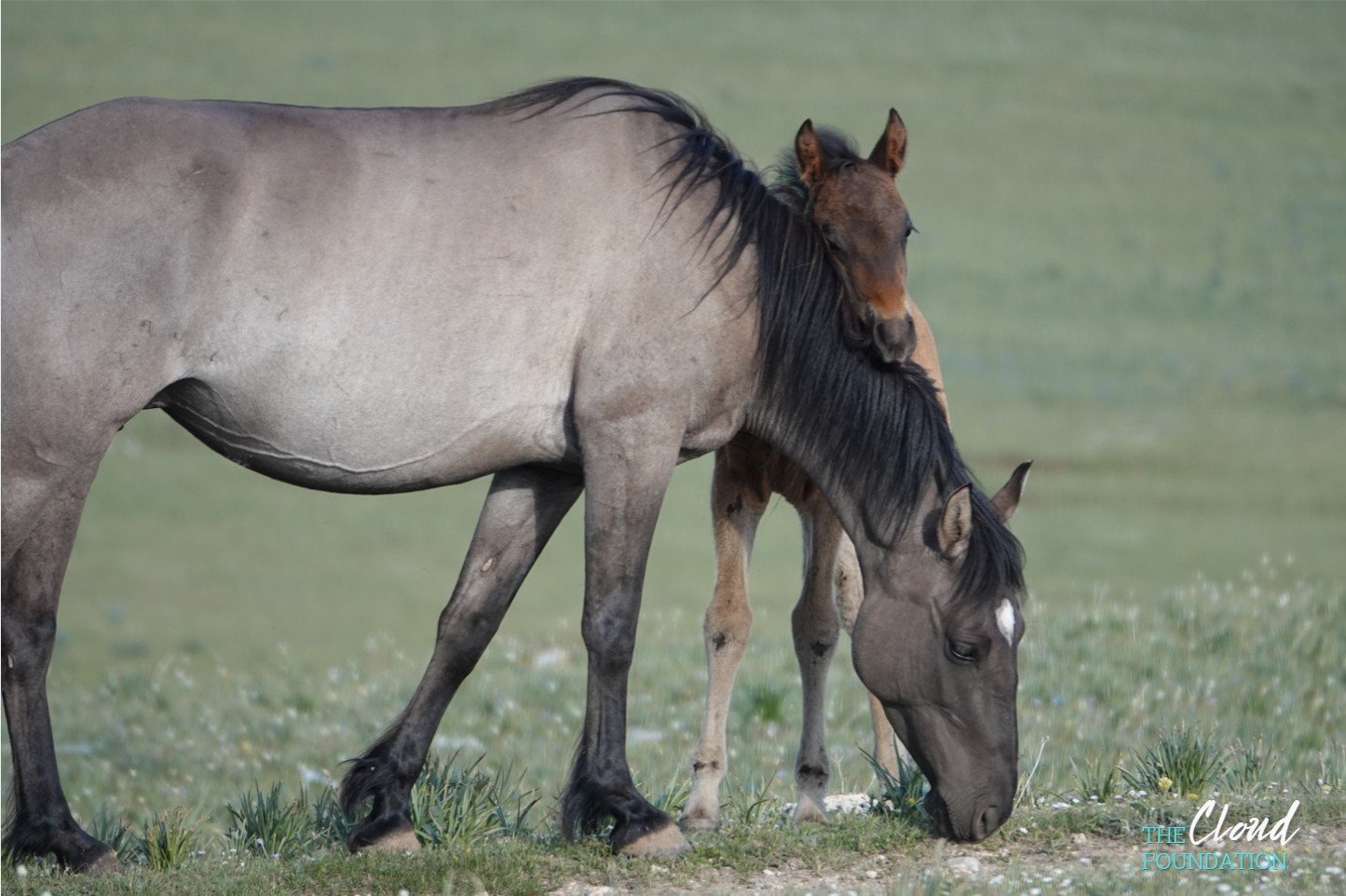
Uma & Astaire - Courage and Comfort
A fleeting moment of curiosity and comfort, as young Astaire (2026) peeks out from behind his mother to investigate an unexpected visitor.
The Pryor Mountain wild horses are facing removal from their home on the range.
The Bureau of Land Management's (BLM) newly released Fiscal Year 2027 tentative roundup schedule lists the Pryor Mountain Wild Horse Range for October 1 through November 15, 2026, with bait trapping planned for the operation.
In August, BLM announced plans to remove approximately 40 wild horses during this first phase of its new management plan. However, BLM has not released updated removal, treatment, and release details with its newly published fall roundup schedule.
Earlier planning documents included examples of how BLM's removal criteria could be applied, but those examples were based on the larger 2023/24 herd population and were not a final list of horses selected for removal.
The herd's demographics have changed considerably since those examples were developed. According to an August 2026 review of the current herd by the Pryor Mountain – Wild Mustang Center, just 29 horses were in the 1–4 age class—the same age group BLM gives first preference for removal after horses meeting its genetic criteria. Recent years of low foal survival have left relatively few young horses coming up through the herd.
With so few young horses now on the range, removals from this age group could have an outsized effect on the herd's age structure and future generations.
It matters even more because the Pryor population does not function as one evenly distributed herd. Horses primarily occupy two distinct areas—the mountain range and the Dryhead—making the effects of removals potentially much greater within each smaller subpopulation.
But the removal of approximately 40 horses is only the beginning.
A Much Smaller Herd
Earlier this year, BLM approved a new management plan for the Pryor Mountain Wild Horse Range, establishing an Appropriate Management Level (AML) of just 107–120 wild horses.
BLM's stated objective is to eventually reach the lower AML of 107 horses.
That means this fall's roundup is not intended to be a one-time removal. Additional removals are authorized as BLM works toward its new population target.
BLM's removal criteria prioritize horses with certain genetic defects and horses resulting from closely related pairings. After those horses, BLM will prioritize removals by age, beginning with younger horses ages 1–4, followed by horses ages 5–10.
For this small, genetically unique and closely documented herd, the horses selected for removal matter. Every horse is part of a family. Every removal changes the herd left behind.
And the cumulative effects could permanently alter the demographic, genetic and social makeup of the Pryor Mountain herd.
A Season of Change
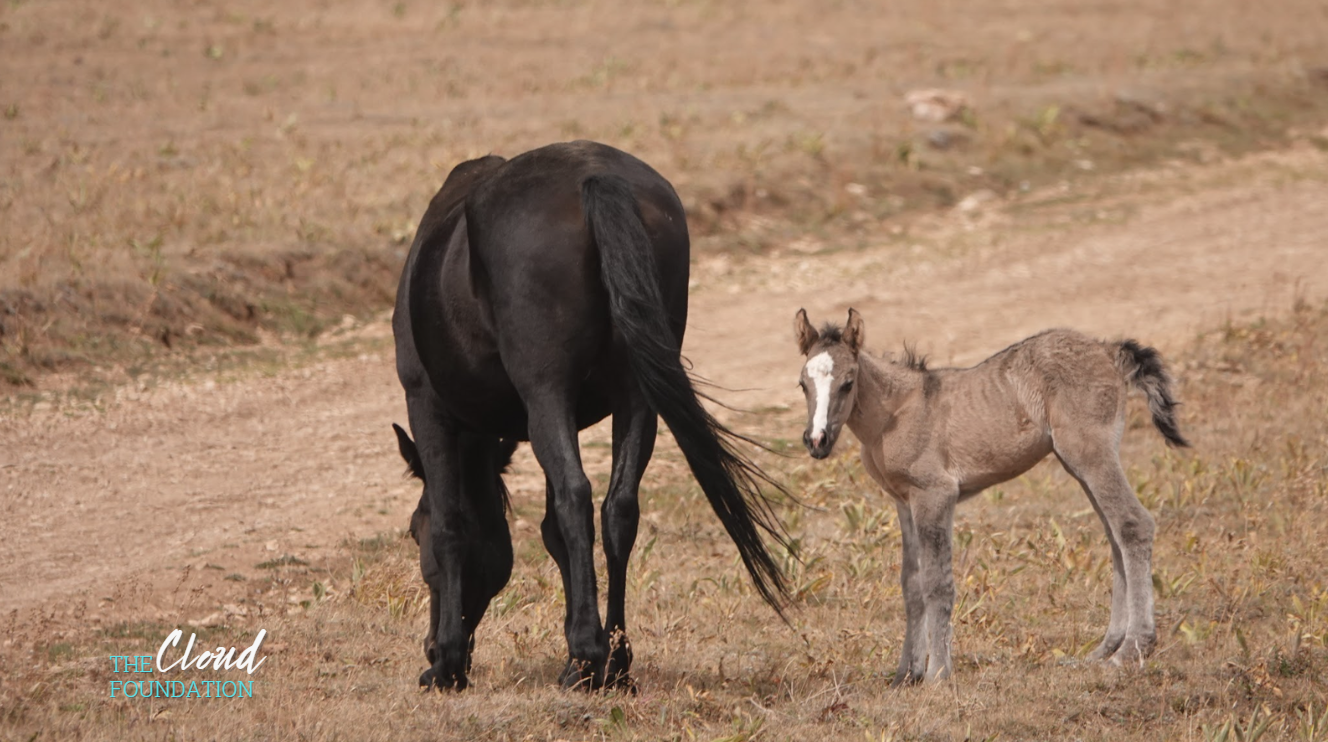
The beautiful black mare, Petite Colour, forages beside her newborn grullo foal, Avalanche, on the Pryor Mountain Wild Horse Range. Photo taken Sept. 1. Happy Birthday, Avalanche!
Meet Avalanche. Born September 1 to Petite Colour and Rio Rue, Avalanche is one of the newest members of the Pryor Mountain herd.
Under BLM's currently published schedule, bait trapping could begin when Avalanche is just one month old. Avalanche and other 2026 foals—some even younger than he—could enter the traps alongside their mothers and families, too young to understand that their world is about to change.
For Avalanche, the Pryor Mountains are the only home he has ever known. And TCF is committed to doing everything we can to make sure they are the only home he ever does know.
Steeped in History
The Pryor Mountain wild horses aren't just another wild horse population.
Their home became America's first designated wild horse range in 1968, three years before Congress passed the Wild Free-Roaming Horses and Burros Act.
The Range was created following a grassroots campaign by citizens determined to protect these horses and their home. Today, it encompasses nearly 40,000 acres along the Montana-Wyoming border and remains one of only four designated wild horse and burro ranges in the United States.
The horses themselves have been watched, studied, and loved for generations. They are known for their strong family bonds and distinctive characteristics. Genetic testing has documented ancestry associated with New World ‘Spanish’ horses and related European Spanish breeds.
And, of course, the Pryors are the home of Cloud—the pale palomino stallion whose life Ginger Kathrens documented for more than two decades through her acclaimed films and whose story inspired the creation of The Cloud Foundation.
For more than half a century, people have fought to ensure that wild horses remain wild in the Pryor Mountains.
That responsibility continues today.
What Happens Next?
The Cloud Foundation will continue to closely follow BLM's plans for the Pryor Mountain wild horses and advocate for management that protects the herd's long-term genetic health, natural behaviors, family structures and future on the range.
We will update this page as additional information becomes publicly available.

Pryor families on the move. From right: Jasper/Jupiter and his mare, Pilar, followed by Encore, Fools Gold, Irial/Indigo Kid, and Encore’s daughter, Xacara. These bands are regularly found traveling together; Pilar and Encore are longtime friends, and their families have maintained close ties over years of changing band dynamics.
Help Protect the Pryor Mountain Wild Horses
If you would like to help support our legal work to protect the Pryor Mountain wild horses, please consider making a gift to TCF's Legal Fund.
Select “Legal Fund” when choosing how you would like your gift directed.
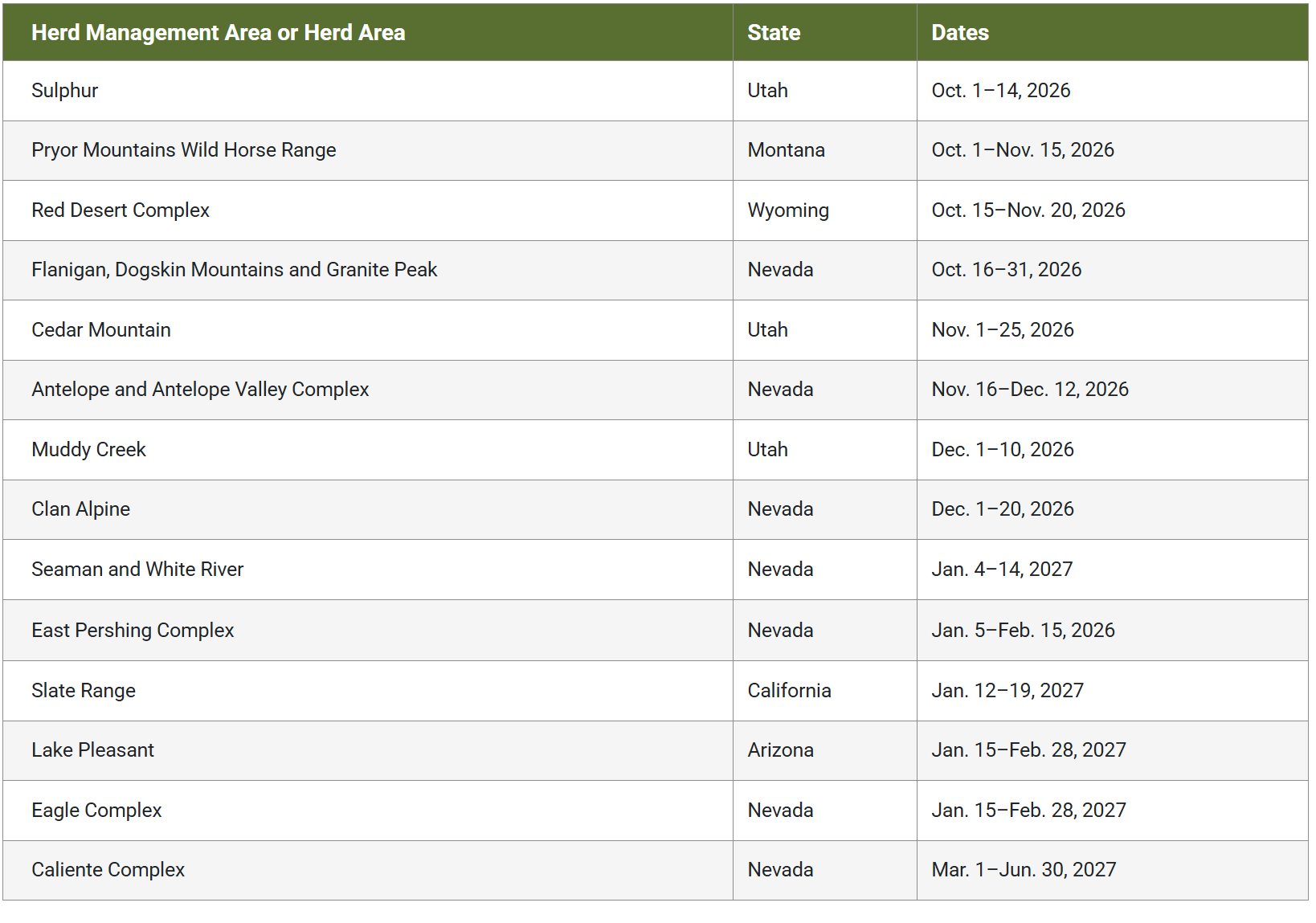
BLM Fall 2026 Tentative Roundup Schedule for the 2027 Fiscal Year.