Callaghan Complex: Largest Wild Horse Roundup in US History
BLM Finalizes Massive Wild Horse Removal Plan in Nevada’s Callaghan Complex
The Bureau of Land Management (BLM) has issued its Final Environmental Assessment (EA) and Decision Record for the Callaghan Complex in Lander County, Nevada — authorizing one of the largest wild horse removals in the West.
If implemented, the plan would remove up to 4,837 wild horses from approximately 1,145,515 acres of public lands.
To put that in perspective:
The roundup area spans more than 1.1 million acres — an area larger than the entire state of Rhode Island.
The Numbers Behind the Decision
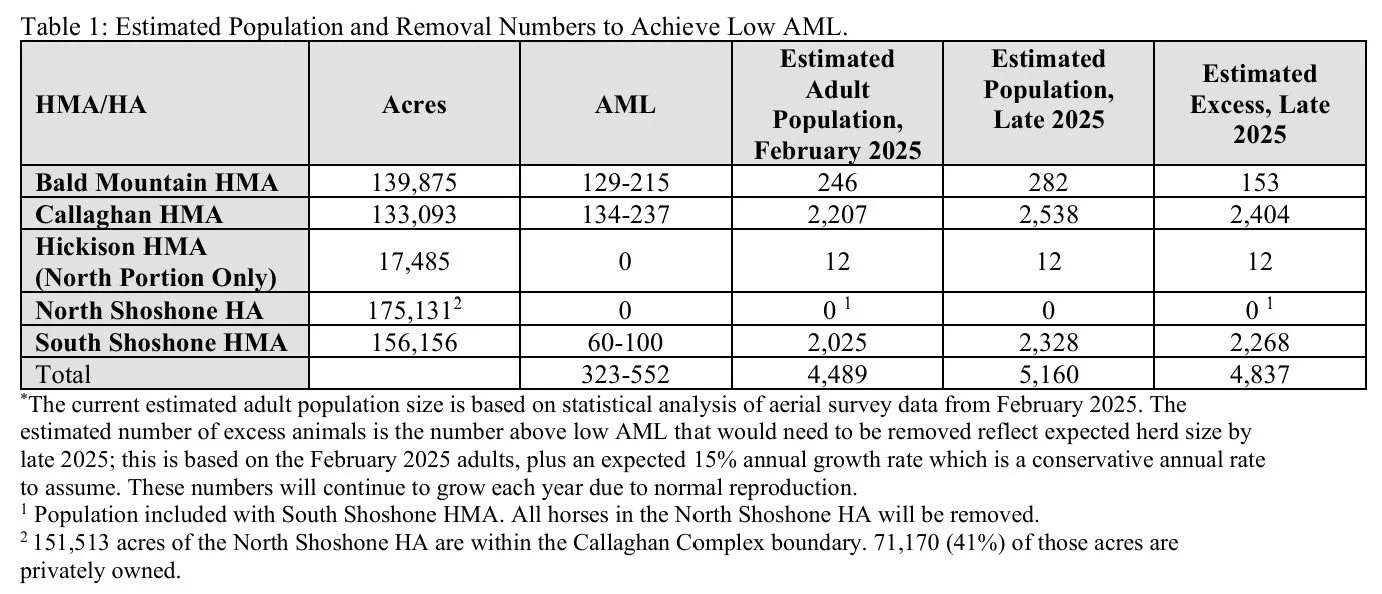
NOTE: The AML for this Complex — 323 to 552 horses across more than one million acres — was established under prior land use plans and is not reevaluated in this EA.
BLM’s Rationale
The agency states that rangeland resources and wild horse health are being affected by what it characterizes as an overpopulated herd.
The EA claims:
Monitoring in 2023 and 2024 showed utilization of “key species” across the Complex.
Some areas reportedly had little to no livestock grazing due to overutilization attributed to wild horses.
Wild horses are contributing to riparian areas not meeting Proper Functioning Condition (PFC) standards.
Horses consume 20–65% more forage than cattle of similar body mass and trim vegetation closer to the ground.
However, the EA does not clearly identify which specific “key species” are driving the conclusion in the summary text, nor does it fully separate the impacts of livestock, drought, wildlife, and other stressors in the main body of the document.
The EA acknowledges that dietary overlap between horses and cattle averages 60–80% in Great Basin ecosystems.
The Larger Context
The cumulative AML for the Callaghan Complex is 323–552 wild horses across more than one million acres.
However, that number is divided among multiple Herd Management Areas (HMAs) within the Complex — including Callaghan, South Shoshone, Bald Mountain, and Hickison (north portion), with North Shoshone designated at AML zero.
When the cumulative AML is distributed across these separate HMAs, individual herds may be reduced to population levels that raise serious concerns about long-term genetic viability.
Wild horse populations require sufficient numbers of breeding-age adults to maintain genetic diversity over time. Very small herd sizes increase the risk of:
Inbreeding
Loss of genetic variation
Reduced adaptability to environmental change
Long-term population instability
The Final EA does not reevaluate AMLs or fully analyze whether the post-removal herd sizes within each HMA will maintain adequate genetic health over the long term.
These are not abstract concerns — they are central to whether wild horses can remain self-sustaining on the landscapes Congress designated for their protection.
Meanwhile, year-round and seasonal livestock continue to graze throughout the complex.

If the Roundup Proceeds
This would be one of the largest wild horse removals in U.S. history.
Nearly 5,000 horses could be removed from their homes and family bands.
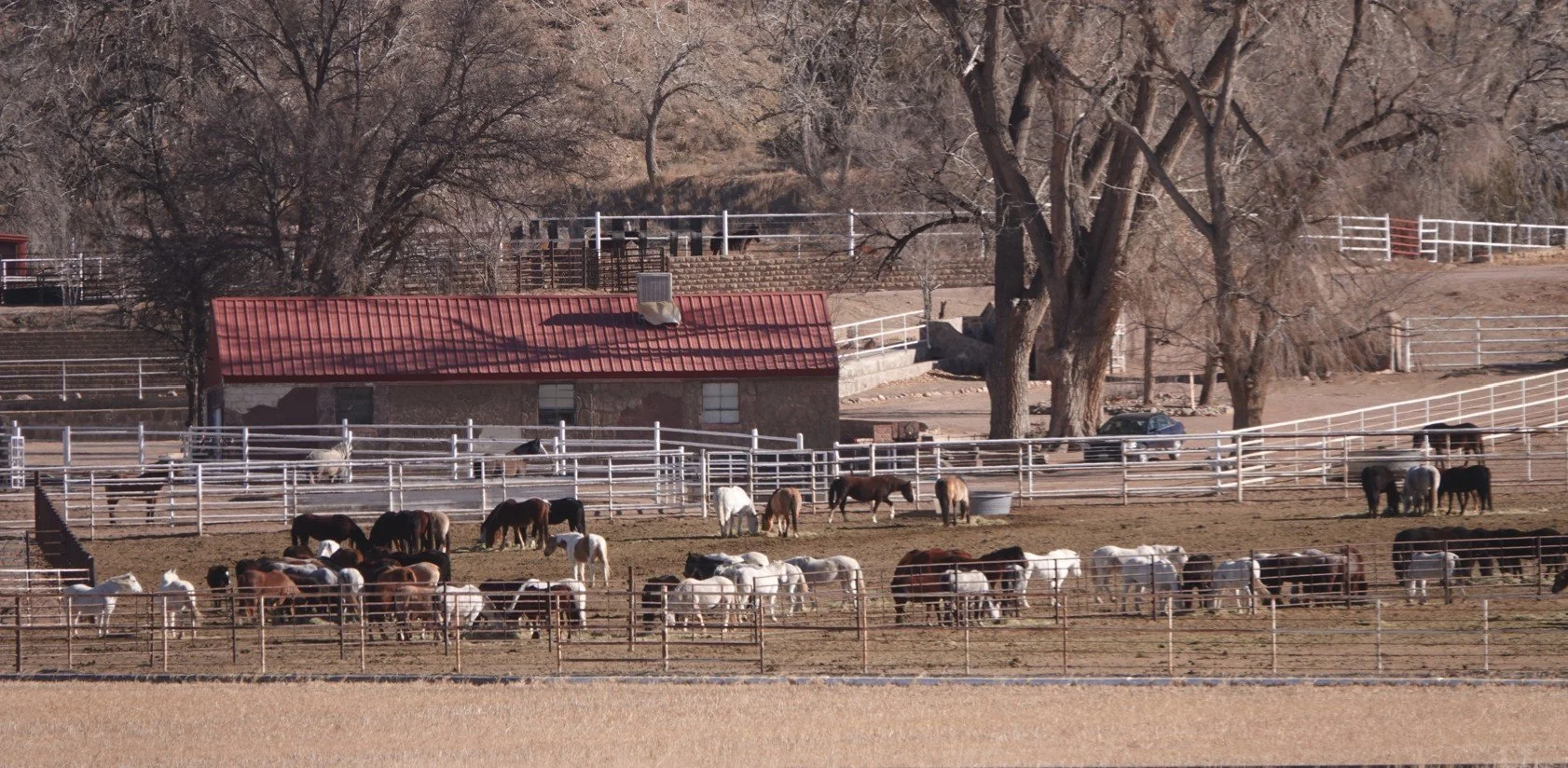
Short- and long-term holding facilities would absorb a massive influx of horses.
Adoption demand is unlikely to match removals, increasing the number of horses warehoused in long-term holding.
The Complex population would be reduced to the low end of AML.
The Cloud Foundation submitted formal comments raising concerns about:
The low AML relative to the size of the Complex
Transparency regarding zeroed-out Herd Areas
Allocation of forage between livestock and wild horses
Long-term genetic viability
Reliance on decades-old land use plans
We are carefully reviewing the Final Decision, including administrative appeal options.
The Decision Record states that it is effective immediately but may be appealed to the Interior Board of Land Appeals under 43 CFR Part 4. Because the decision is effective immediately, any appeal would require a Petition for Stay to prevent implementation while the appeal is reviewed.
Why This Matters
The Callaghan Complex represents one of Nevada’s significant wild horse strongholds. Decisions made here will shape the future of wild horse management across the West.
Balancing rangeland health, multiple use, and the protections of the Wild Free-Roaming Horses and Burros Act requires rigorous science, transparency, and equitable allocation of public resources.
We believe those standards must be applied consistently.
Implementation Timeline Unclear
Although the Decision Record is effective immediately, the Bureau of Land Management has not posted a roundup schedule for the Callaghan Complex (or anywhere else, for that matter).
Inquiries regarding when BLM might issue a Fertility Control and Roundup Schedule have been met with direction to “monitor the BLM website for updates.”
Without a publicly posted roundup schedule, it remains unclear when — or in what sequence — removals across may begin.
This uncertainty complicates public oversight and raises broader questions about statewide capacity, holding facilities, and cumulative impacts if multiple large-scale removals proceed in the same year.
Stay Tuned…
We will continue to keep you informed.
Stay engaged.
Stay informed.
Wild horses deserve thoughtful, science-based management — not default reliance on a mass removal plan.
