🐎 Muddy Creek Wild Horses Need Your Voice
Speak Up for a Fair, Science-Based Plan
The Bureau of Land Management (BLM) is developing a long-term management plan for Utah’s Muddy Creek Herd Management Area (HMA)—and the future of this wild horse herd is at stake.
👉 Public comments are open now. Click TAKE ACTION to sign our petition.
You may also scroll to the bottom of this page to PARTICIPATE NOW and submit personal comments.
DUE APRIL 1, 2026
🚨 What’s Happening
BLM proposes to continue managing this herd at extremely low population levels—just 75 to 125 horses—for the next 15–20 years.
But BLM’s own data shows that:
The herd has low genetic diversity
Current management practices and BLM’s enforced herd population numbers are causing inbreeding
At least 150–200 horses are needed to maintain genetic health
Despite this, BLM plans to continue the same approach.
🌱 The Real Issue: Forage Allocation
This isn’t just about horse numbers—it’s about how public lands are managed.
According to BLM data:
Over 1,330 cattle (annual equivalent) are permitted in the HMA
Plus 290 more in nearby areas removed from horse use
Even after reductions in livestock use, at least 388 cattle equivalents will continue to graze
👉 Meanwhile, wild horses are limited to just 75–125 animals
That means:
Wild horses receive just 5–9% of the available forage
Livestock receive up to 18 times more
This imbalance keeps the herd too small to remain genetically healthy.
🧬 Why This Matters
When herds are kept too small:
Genetic diversity declines
Inbreeding conditions develop
Long-term survival is threatened
BLM’s own genetic data confirm that this herd is already experiencing these impacts.
🗺️ A Shrinking, Fragmented Habitat
Muddy Creek HMA with areas removed from wild horse use
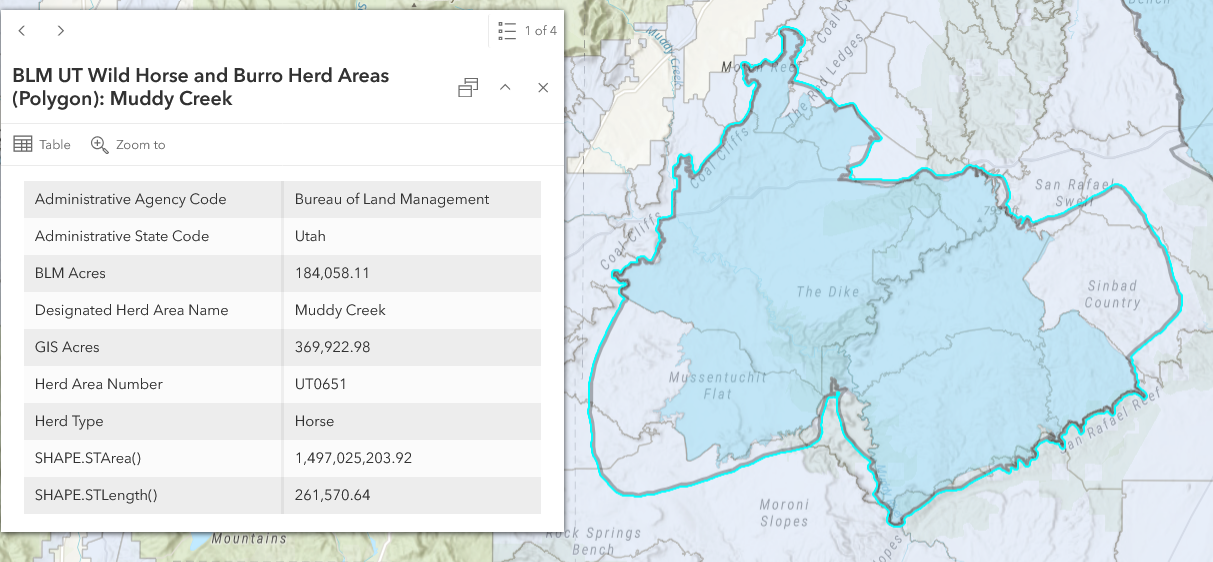
Sections of the original herd area have been “zeroed out,” reducing available habitat and forage and limiting where horses can live and move.
Muddy Creek and Sinbad herd areas—now separated?
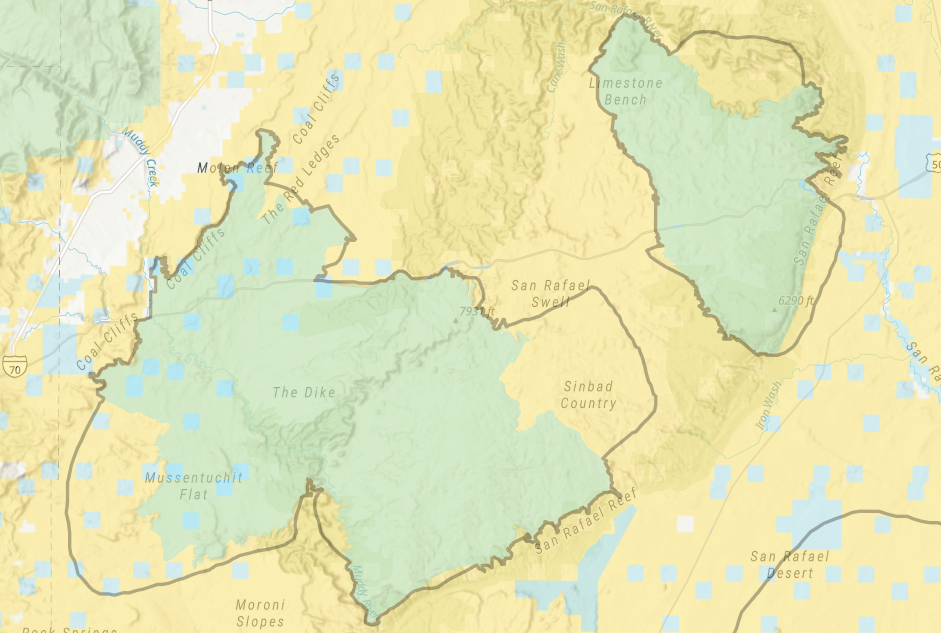
These adjacent horse and burro areas appear to have once been more connected. Today, they are divided by land managed for other uses, further restricting movement and habitat connectivity for the Muddy Creek (wild horse) and Sinbad (wild burro) herds.
⚖️ What Needs to Change
We are calling on BLM to adopt a fair, science-based management plan that:
Increases the low AML to at least 150–200 horses
Allocates forage more equitably between wildlife and livestock
Uses only reversible fertility control methods
Maintains a natural sex ratio
Allows fertility control without first reducing populations to low AML
🗣️ Take Action
BLM needs to hear from the public.
👉 Submit your comment today and speak up for Utah’s Muddy Creek wild horses.
💡 Final Note
America’s wild horses are protected as “an integral part of the natural system of the public lands.”
They deserve management that reflects:
Science
Fairness
Public values