Red Desert Complex: Stop Sterilization & Herd Reductions
Take Action:
Protect Wyoming's Red Desert Wild Horses
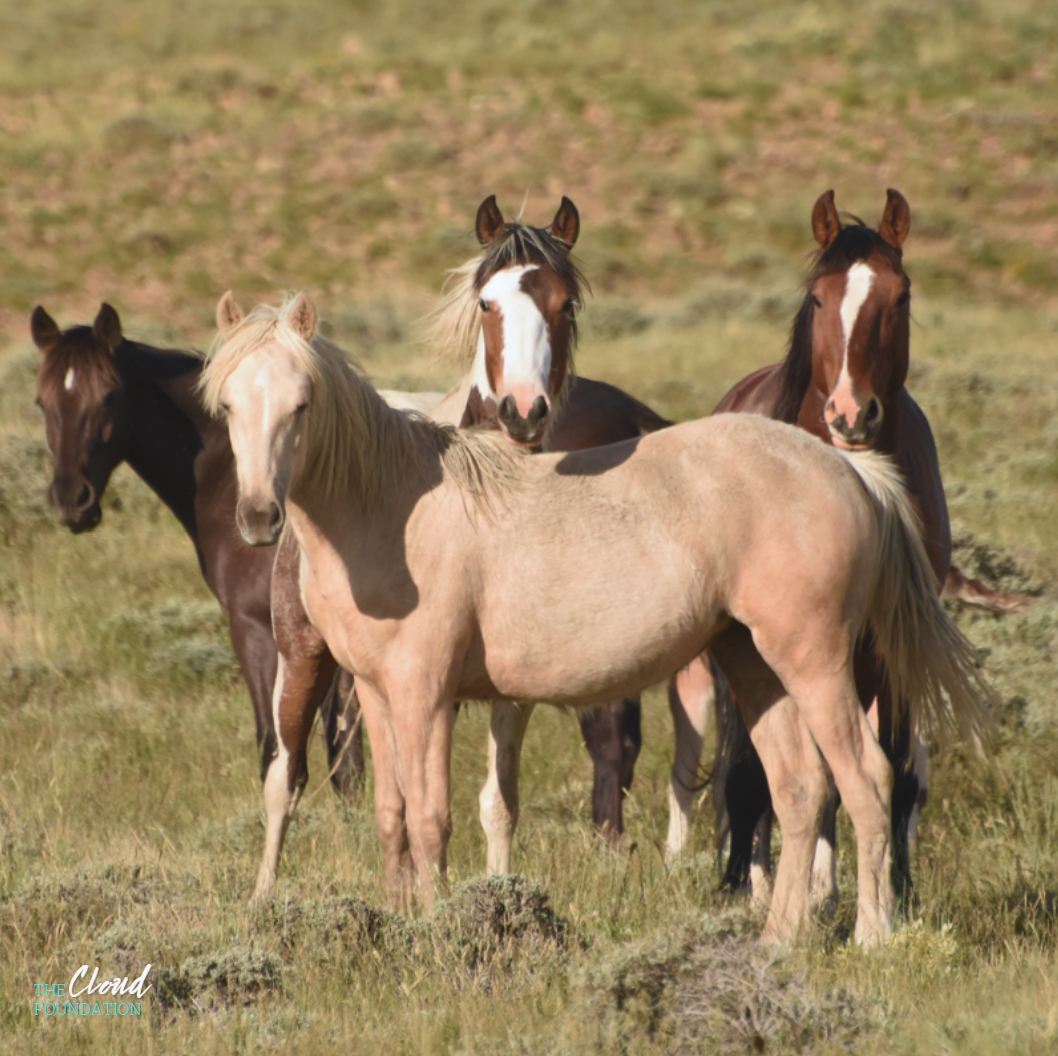
Lost Creek wild horses, Red Desert Complex, WY.
BLM's Red Desert Complex proposal threatens the future of one of Wyoming's most iconic wild horse landscapes.
The Bureau of Land Management (BLM) released its Red Desert Complex Herd Management Area Plan (HMAP) Environmental Assessment (EA) just 27 federal working days after the close of the public scoping period on May 4, 2026.
Given the size and complexity of this proposal, that extraordinarily compressed timeline raises serious concerns about whether BLM conducted the required "hard look" analysis mandated by the National Environmental Policy Act (NEPA).
If approved, this proposal would fundamentally alter Wyoming's wild horse herds through permanent and experimental management practices while dramatically reducing the number of horses allowed to remain on the range.
What's Being Proposed?
BLM's preferred alternative would:
Castrate wild stallions and release them back onto the range;
Use fertility control drugs that could permanently sterilize mares;
Artificially skew herd sex ratios, disrupting natural herd behavior and social structure; and
Remove nearly 1,800 wild horses, leaving just 480 horses across approximately 1,175 square miles—an area larger than the state of Rhode Island.
These actions are not supported by the best available science and threaten the long-term health, genetic viability, and natural behaviors of Wyoming's wild horse herds.
Why We're Concerned
1. The Proposal Prioritizes Livestock Over Wild Horses
Across the Red Desert Complex, livestock grazing already far exceeds wild horse use. In several Herd Management Areas, livestock receive multiple times the forage allocated to wild horses.
Rather than examining whether livestock allocations should be adjusted to better fulfill the Wild Free-Roaming Horses and Burros Act's mandate to protect thriving natural ecological balances, BLM instead proposes removing nearly 1,800 wild horses while maintaining existing livestock allocations.
The result would leave only 480 horses across more than 1,100 square miles of public lands.
2. Population Models May Be Based on Flawed Assumptions
BLM relies heavily on computer population modeling to justify its proposed management actions.
However, those projections assume fertility control methods remain reversible.
Scientific evidence indicates that GonaCon may permanently sterilize mares after as few as two applications. If those assumptions are incorrect, the population projections used throughout the Environmental Assessment may significantly overestimate future foal production while underestimating the long-term impacts of repeated fertility control.
Management decisions should be based on the best available science—not optimistic assumptions that may not reflect real-world outcomes.
3. Stallion Castration Would Fundamentally Change Wild Horse Society
Wild horses are highly social animals.
Band stallions protect mares and foals, defend territories, and help maintain the complex social structure that has evolved over thousands of years.
Castrating wild stallions and returning them to free-roaming herds would fundamentally alter those natural dynamics in ways that remain poorly understood.
4. Artificial Sex Ratios Create Unnatural Herd Dynamics
The proposal also allows BLM to manage herds with artificially skewed sex ratios.
Wild horse populations naturally fluctuate around balanced male-to-female ratios. Deliberately reducing the number of mares available for breeding can increase competition among stallions, disrupt stable family bands, and create long-term changes in herd behavior.
5. Wyoming's Wild Horses Deserve Science-Based Management
The Wild Free-Roaming Horses and Burros Act directs BLM to protect and manage wild horses as integral components of our public lands.
Management decisions should protect healthy, genetically viable herds while preserving their natural behaviors—not rely on permanent sterilization, surgical procedures, or artificially manipulated populations.
What We're Asking BLM To Do
The Cloud Foundation urges BLM to:
Increase minimum Appropriate Management Levels (AMLs) to maintain genetically viable herds;
Prohibit stallion castration, permanent sterilization, and artificial sex-ratio manipulation;
Use only humane, reversible fertility control methods such as PZP when fertility control is necessary;
Reevaluate livestock allocations alongside wild horse management using the best available science; and
Fully analyze the long-term impacts of these proposals before making any final decision.
Take Action Today
BLM is accepting public comments on the Red Desert Complex Environmental Assessment through July 13, 2026.
By signing The Cloud Foundation's petition, your voice will become part of the official administrative record calling for humane, science-based management of Wyoming's wild horses.
If you would like to submit your own personal comments directly to BLM, we encourage you to do so as well. Personalized comments are an important part of the public process and can reinforce the concerns raised in our petition.
Together, we can help ensure that Wyoming's wild horses continue to live wild and free for generations to come.
Additional Resources
Want to learn more or submit your own comments?
View the official BLM Environmental Assessment and related documents.
👉Click below to see the EA Documents & Submit Personal Comments
Submitting your own personalized comments directly to BLM is an important part of the public process. Every unique comment helps demonstrate the strong public interest in protecting Wyoming's wild horses.